
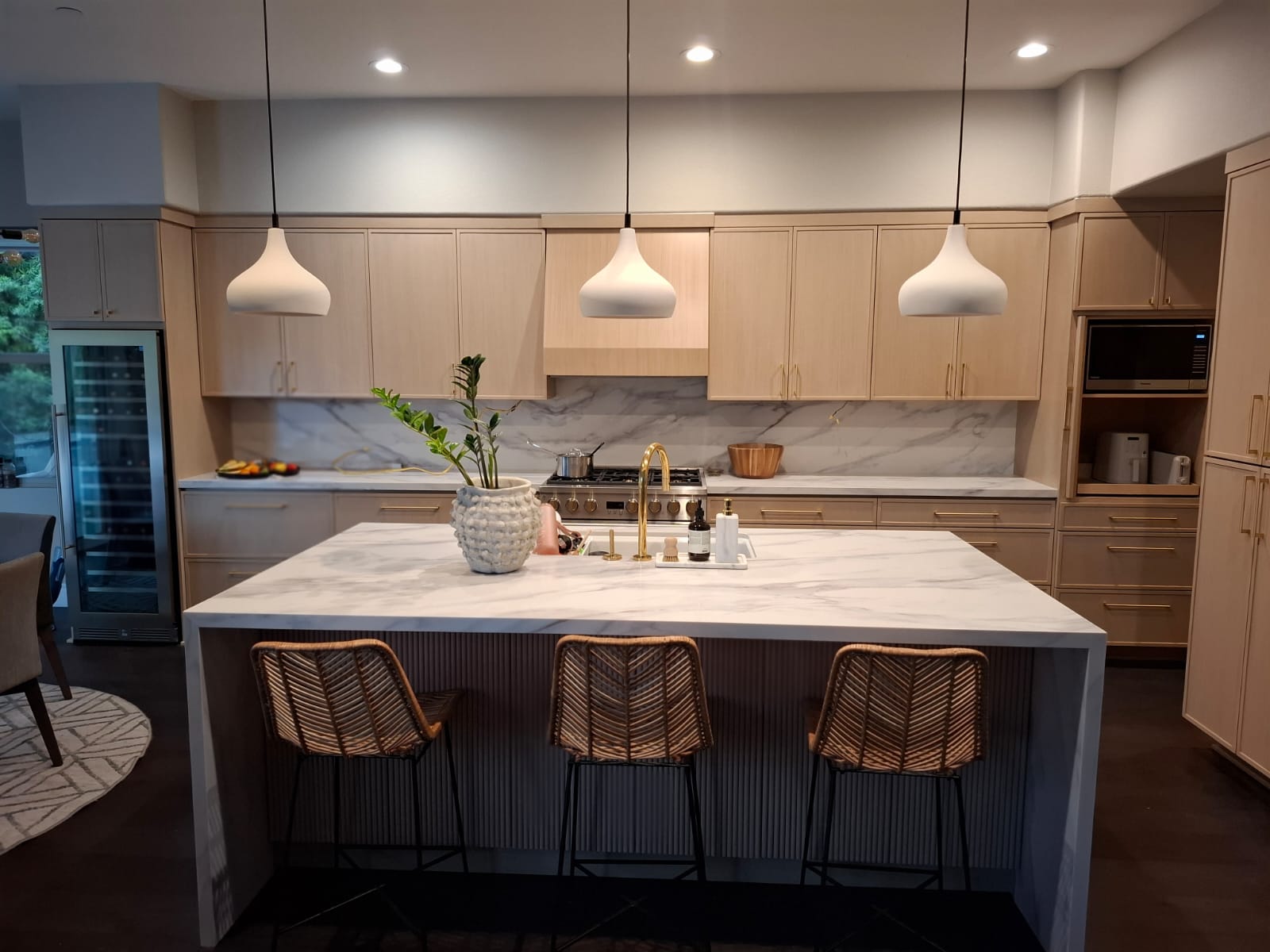
Hiring a residential general contractor in San Diego for a whole-home renovation comes down to three things: a verified license, a written contract that protects you, and a team that communicates. A whole-home project touches framing, plumbing, electrical, permits and finishes at the same time, so the contractor you pick is managing risk on your largest asset. This guide walks through how to vet one properly, what a fair contract looks like, what the work tends to cost in San Diego, and the questions that separate a dependable builder from a cheap quote you will regret.
A whole-home renovation is not a handyman job. It is a sequenced build with inspections, subcontractors and a schedule, and California law treats it that way. The good news is that most of what you need to check is public and free to look up before you sign anything.
What Does a Residential General Contractor Do?
A residential general contractor is the single company accountable for your whole project. They plan the scope, pull the permits, schedule and supervise the subcontractors (plumbers, electricians, HVAC, drywall, tile, cabinetry), order materials, coordinate city inspections, and hand the home back to you finished. When one team owns all of that, you have one phone number to call and one party responsible when something needs to be fixed.
The alternative is hiring trades yourself and managing them, which saves a markup on paper but puts the scheduling, permit and liability burden on you. For a full-home remodel in San Diego, most homeowners want a general contractor precisely so they are not the one chasing a plumber who did not show up before the drywall crew arrives.
AH Construction has worked as a general contractor across San Diego County since 2005 (CSLB #912852), running residential remodels and commercial build-outs with the same project-management approach. If you want one team from design through final walkthrough, that is the design-build model.
How Do You Verify a Residential General Contractor in San Diego?
Start with the license, because in California it is required and it is checkable in two minutes. Any contractor performing work where labor and materials total $500 or more must hold a current license from the Contractors State License Board (CSLB). For a whole-home renovation, you want a Class B (General Building) license, which covers projects involving two or more unrelated trades.
Check the CSLB License
Go to the CSLB website, search the contractor’s name or license number, and confirm four things.
- The license is active, not expired, suspended or revoked.
- The classification fits the work. Class B (General Building) is the right one for a multi-trade whole-home remodel.
- The business name on the license matches the name on the quote and the contract.
- The contractor’s bond and, if they have employees, Workers’ Compensation are listed as current.
Write down the license number and compare it to what the contractor prints on their proposal. A legitimate builder puts the number on everything. If a quote has no CSLB number, that is your first red flag.
Confirm Insurance and Workers’ Compensation
A license is the floor, not the ceiling. Ask for a certificate of insurance showing general liability coverage, and if the contractor has employees, proof of active Workers’ Compensation. Workers’ Comp matters more than people realize: if an uninsured worker is injured on your property, you can be exposed. The CSLB listing shows whether a contractor carries Workers’ Comp or has filed an exemption, so cross-check it against what they tell you.
What Should a Residential Construction Contract Include?
In California, a home improvement contract for work over $500 must be in writing. Never let a whole-home renovation run on a handshake or a one-line estimate. A clear contract is the document that protects both sides, and reading it carefully is the single most useful hour you will spend on the project.
Here is what a complete residential contract should spell out.
| Contract element | Why it protects you |
|---|---|
| Detailed scope of work | Lists exactly what is included room by room, so “remodel the kitchen” cannot shrink later. |
| Materials and allowances | Names finishes and sets dollar allowances for tile, fixtures and cabinets you choose later. |
| Total price and payment schedule | Ties each payment to completed milestones, not to a calendar. |
| Start and completion dates | Gives the project a timeline you can hold the builder to. |
| Change-order process | Requires any scope or price change to be written and signed before work proceeds. |
| Permits and responsibility | States that the contractor pulls the required permits. |
| Warranty terms | Defines what is covered after completion and for how long. |
Two California rules are worth knowing before you write a check. First, the down payment on a home improvement contract is limited by law to 10 percent of the contract price or $1,000, whichever is less. A contractor who demands half the money up front is not following the rules. Second, payments after that should be tied to progress, so you are paying for work that is actually done.
How Change Orders Work
A change order is a written, signed amendment to the contract when something changes, whether you upgrade a finish or the crew opens a wall and finds old plumbing that has to be replaced. The rule to insist on is simple: no change proceeds without a written change order that states the new scope and the price. This is where loosely managed projects turn into disputes, and where a disciplined general contractor earns the fee. For how scope and budget interact before you ever break ground, see our guide on planning a custom home remodel.
How Much Does a Whole-Home Renovation Cost in San Diego?
Whole-home renovation cost depends on square footage, how much you change structurally, and the level of finishes you select. The ranges below are current San Diego market estimates for 2026 and are meant for planning only. A Project Manager gives a written, project-specific estimate after seeing the home.
| Scope | Typical San Diego range (estimate) | What drives the cost |
|---|---|---|
| Cosmetic whole-home refresh | $75,000 – $150,000 | Paint, flooring, fixtures, no layout changes. |
| Mid-range full remodel | $150,000 – $350,000 | New kitchen and baths, some walls moved, updated systems. |
| High-end / structural remodel | $350,000 – $700,000+ | Reconfigured floor plan, premium finishes, new MEP throughout. |
| Remodel plus addition | Add $250 – $500 / sq ft for new space | Foundation, framing and roof for the added footprint. |
Costs run higher when the home needs structural work, when permits require upgrades to electrical or plumbing to meet current code, or when access is tight. If your plans include adding square footage, our home addition guide covers how additions are scoped, and the custom remodeling budget guide breaks down where the money goes. Specific rooms carry their own cost drivers, which we cover for a kitchen remodel and a bathroom remodel.
What Questions Should You Ask Before Hiring?
A short interview tells you a lot. Ask each contractor the same questions and compare how they answer.
- Can you give me your CSLB license number and current proof of insurance?
- Will you pull the permits, and which parts of this project need them?
- Who is my point of contact day to day, and how often will I get updates?
- How do you handle change orders and unexpected conditions behind the walls?
- Can I see recent whole-home projects and talk to those homeowners?
- What does your payment schedule look like, and what is tied to each payment?
The answers you want are specific and calm. A contractor who names their Project Manager, explains their change-order process without hesitation and shows real projects is telling you how the job will run. You can see examples of completed work on our projects page.
How Do You Compare Bids Fairly?
Collecting three bids is standard advice, but the bids are only comparable if they cover the same scope. Contractors quote what they think you want, so one builder’s $200,000 may include new windows and upgraded electrical while another’s $180,000 assumes you keep both. Before you compare numbers, make sure every bid lists the same rooms, the same materials or allowances, and the same systems work. A lower price that excludes the subfloor repair or the panel upgrade is not actually lower.
Read how each bid handles allowances. An allowance is a placeholder dollar amount for a finish you have not chosen yet, such as tile or cabinets. A contractor who sets realistic allowances gives you a number you can trust; one who lowballs the allowances produces a tidy bid that balloons once you start picking finishes. Ask each bidder what their allowances assume, and whether the figure is per square foot or installed.
Finally, call references and, where you can, visit a finished project. Ask the homeowner whether the work stayed on schedule, how change orders were handled, and whether they would hire the contractor again. A builder who manages projects well will have homeowners who are happy to talk. One who does not will be slow to produce references at all.
Red Flags to Watch For
Some warning signs are worth walking away over.
- No license number on the quote, or a license that does not match the business name.
- A demand for a large cash deposit, or any down payment over the legal 10 percent / $1,000 limit.
- A price far below every other bid, which usually means missing scope or unlicensed labor.
- Pressure to start immediately or to skip permits “to save time and money.” Unpermitted work can block a future sale and void insurance.
- No written contract, or a vague one-page estimate presented as the agreement.
- Poor communication during the bidding stage, which rarely improves once they have your deposit.
How AH Construction Approaches Whole-Home Renovations
AH Construction runs residential projects on a six-step process: site evaluation and planning, design and pre-construction, permitting and coordination, construction execution, final walkthrough, and project completion. A Project Manager is assigned to your home, puts the scope and estimate in writing, pulls the permits, and keeps you updated through each phase. Clear communication and schedule adherence are the themes that come up most often in our Google reviews (4.9 stars across 37 reviews).
We are a licensed and insured California general contractor, CSLB #912852, serving San Diego County since 2005. Whether your renovation is one phase of a larger plan or a full reconfiguration with an ADU on the lot, you work with one accountable team from the first walkthrough to the last inspection. We serve San Diego and the surrounding cities listed on our service area page. AH Construction is a San Diego general contractor serving businesses and homeowners across San Diego County since 2005.
Frequently Asked Questions
Do I need a licensed general contractor for a whole-home renovation in San Diego?
Yes. In California, any construction work where labor and materials total $500 or more must be performed by a contractor licensed with the CSLB. For a whole-home renovation that involves multiple trades, you want a Class B (General Building) license. You can verify any license for free on the CSLB website before you sign a contract.
How much down payment can a contractor ask for in California?
For a home improvement contract, California law limits the down payment to 10 percent of the contract price or $1,000, whichever is less. Payments after the deposit should be tied to completed milestones. A contractor who demands a large up-front deposit is not following the rules, and that is a reason to be cautious.
How long does a whole-home renovation take in San Diego?
It depends on the scope. A cosmetic refresh can run a few weeks, while a full remodel with layout changes and new systems typically takes several months once permits are issued. Permitting timelines vary by jurisdiction. A Project Manager gives you a schedule with start and completion dates in the contract, so you know what to expect.
What should be in my construction contract?
A written scope of work, materials and allowances, the total price, a milestone-based payment schedule, start and completion dates, a written change-order process, permit responsibility, and warranty terms. In California, home improvement contracts over $500 must be in writing, so never run a whole-home project on a verbal agreement or a one-line estimate.
Does AH Construction handle permits for residential remodels?
Yes. Permitting and coordination is step three of our six-step process. We pull the required permits and coordinate city inspections as part of managing the project, so the work is done to code and documented. AH Construction is licensed and insured, CSLB #912852, serving San Diego County since 2005.