
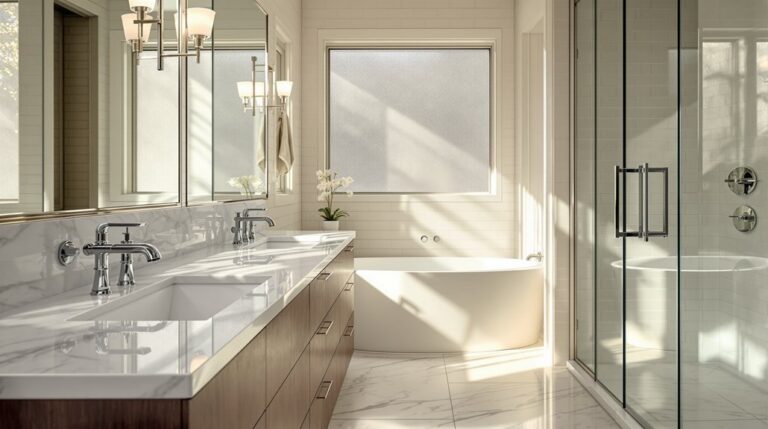
When remodeling your San Diego bathroom, you’ll need materials that resist salt air corrosion and coastal humidity. Choose porcelain tile flooring for zero water absorption, quartz countertops for UV resistance, and marine-grade stainless steel fixtures to prevent pitting. Opt for large-format glazed tiles to minimize grout lines and moisture penetration. Your climate demands moisture-resistant finishes and proper ventilation to combat marine layer effects. Understanding these coastal considerations will help you select materials that’ll maintain their beauty and functionality for years.
Key Takeaways
- Choose porcelain tile flooring and quartz countertops for zero water absorption and resistance to San Diego’s coastal humidity.
- Select marine-grade stainless steel fixtures and hardware to prevent corrosion from salt air exposure in coastal environments.
- Use large-format glazed tiles with low absorption rates to minimize grout lines and reduce moisture penetration points.
- Prioritize moisture-resistant materials like luxury vinyl plank and solid surface countertops to prevent mold and mildew growth.
- Apply marine-grade sealants on all surfaces to ensure durability against temperature fluctuations and Mediterranean weather conditions.
Understanding San Diego’s Coastal Climate Impact on Bathroom Materials

When you’re planning a bathroom remodel in San Diego, you’ll need to account for the unique challenges that the coastal climate presents to your material choices.
The ocean’s salt air accelerates corrosion on metal fixtures and hardware, making stainless steel and powder-coated finishes essential. High humidity levels demand materials with superior moisture resistance to prevent mold and mildew growth.
You’ll also face temperature fluctuations that cause expansion and contraction, potentially cracking grout and tile. Choose non-porous surfaces like quartz countertops and porcelain tiles that won’t absorb moisture.
Consider marine-grade sealants and finishes designed to withstand San Diego’s coastal environment.
Moisture-Resistant Flooring Options for Coastal Bathrooms
Since moisture poses the greatest threat to bathroom floors in San Diego’s coastal environment, you’ll want to prioritize materials that resist water penetration entirely while maintaining their structural integrity.
Porcelain tile stands out as your best choice, offering zero water absorption and exceptional durability against salt air exposure.
Luxury vinyl plank provides a waterproof alternative with natural wood aesthetics at lower costs.
Natural stone, like granite or slate, works well when properly sealed, though it requires more maintenance.
Avoid traditional hardwood, laminate, or standard ceramic tiles, as these materials can’t withstand San Diego’s persistent coastal humidity.
Countertop Materials That Thrive in Mediterranean Weather

Mediterranean weather in San Diego brings year-round temperature fluctuations, intense UV exposure, and varying humidity levels that’ll test your countertop materials beyond typical indoor conditions.
You’ll need surfaces that resist fading, cracking, and moisture damage while maintaining their beauty.
Top countertop materials for San Diego’s climate include:
- Quartz engineered stone – Non-porous, UV-resistant, and maintains consistent color
- Natural granite – Heat-resistant with excellent durability against temperature changes
- Solid surface materials – Seamless installation prevents moisture infiltration
- Porcelain slabs – Ultra-thin, lightweight, and completely waterproof
- Concrete with proper sealing – Customizable and naturally resistant to environmental stress
Tile Selection for Walls and Showers in Humid Conditions
While countertops face Mediterranean climate challenges primarily through temperature and UV exposure, your bathroom walls and shower areas battle a different enemy: constant moisture and humidity that can destroy poorly chosen materials.
You’ll want porcelain or ceramic tiles with low water absorption rates below 0.5%. Natural stone requires proper sealing but offers durability. Glass tiles resist moisture completely but need professional installation.
Avoid porous materials like untreated marble or limestone. Choose glazed tiles over unglazed for better water resistance. Large-format tiles minimize grout lines, reducing moisture penetration points.
Consider textured surfaces for shower floors to prevent slipping when wet.
Fixtures and Hardware That Resist Salt Air Corrosion

After addressing moisture challenges in your shower walls, you’ll face an equally destructive force throughout your Mediterranean bathroom: salt-laden air that corrodes standard fixtures within months.
Marine-grade stainless steel (316L) provides superior corrosion resistance compared to standard grades. Solid brass fixtures with protective coatings won’t pit or tarnish like chrome-plated alternatives.
You’ll need hardware specifically rated for coastal environments.
Consider these corrosion-resistant materials:
- 316L marine-grade stainless steel faucets and handles
- Solid brass fixtures with powder-coated finishes
- Bronze hardware with protective sealants
- Polymer-based towel bars and accessories
- Galvanized steel with zinc-rich primer coatings
These investments prevent costly replacements and maintain your bathroom’s aesthetic appeal.
Ventilation Systems Essential for Marine Layer Management
Since salt air damages your fixtures, you’ll also need robust ventilation to combat the persistent moisture that marine layers deposit throughout your bathroom.
Install exhaust fans rated for coastal conditions with higher CFM capacity than standard inland requirements. Choose fans with stainless steel or powder-coated aluminum components that won’t corrode.
Position intake vents strategically to create cross-ventilation that moves humid air out quickly. Consider moisture-sensing switches that automatically activate when humidity rises.
Upgrade to variable-speed fans that adjust airflow based on conditions. Don’t overlook ductwork—use galvanized steel or PVC ducting with proper exterior venting to prevent moisture buildup.
Paint and Finish Options for Long-Lasting Performance

Beyond ventilation hardware, your paint and finish selections directly determine how well your bathroom surfaces withstand coastal humidity and salt exposure.
You’ll need moisture-resistant paints with mildew-blocking properties to combat San Diego’s marine environment.
Choose these high-performance options for superior durability:
- Semi-gloss or satin acrylic paints for easy cleaning and moisture resistance
- Epoxy-based primers on previously painted surfaces
- Ceramic or glass tile with sealed grout lines
- Marine-grade polyurethane finishes for wood elements
- Antimicrobial additives in paint formulations
These materials create protective barriers against salt air infiltration while maintaining attractive appearances.
Proper surface preparation guarantees maximum adhesion and longevity in your coastal bathroom environment.
Budget-Friendly Materials That Don’t Compromise Quality
Three strategic approaches can help you achieve a high-quality bathroom remodel without exceeding your budget. You’ll maximize value by selecting materials that offer durability and style at reasonable prices.
| Material Category | Budget-Friendly Option | Quality Feature |
|---|---|---|
| Flooring | Luxury vinyl plank | Waterproof, wood-look design |
| Countertops | Quartz remnants | Non-porous, consistent patterns |
| Fixtures | Brushed nickel faucets | Corrosion-resistant, timeless appeal |
You can’t go wrong with ceramic subway tiles for walls—they’re affordable, versatile, and never go out of style. Consider vanities with engineered wood construction instead of solid wood. They’re moisture-resistant and cost considerably less while maintaining structural integrity.
Frequently Asked Questions
How Long Does a Typical Bathroom Remodel Take in San Diego?
You’ll typically need 2-4 weeks for a standard bathroom remodel in San Diego, though it can extend to 6-8 weeks for extensive renovations.
Your timeline depends on factors like permit approval, material availability, and contractor schedules.
You’ll find that plumbing and electrical work often takes the longest.
Weather rarely affects indoor work here, but busy construction seasons can delay your project.
You should add extra time for unexpected issues that commonly arise during demolition.
Do I Need Permits for Bathroom Remodeling in San Diego County?
You’ll likely need permits for bathroom remodeling in San Diego County, depending on your project’s scope.
Minor updates like replacing fixtures or tiles typically don’t require permits, but you’ll need them for electrical work, plumbing changes, or structural modifications.
Moving walls, installing new circuits, or relocating plumbing always requires permits.
Contact San Diego County’s building department to determine specific requirements for your project, as permit needs vary based on the work’s complexity and local regulations.
What’s the Average Cost of Bathroom Remodeling in San Diego?
You’ll typically spend between $15,000 and $35,000 for a mid-range bathroom remodel in San Diego, though costs can vary considerably.
A basic refresh might cost $8,000-$15,000, while luxury renovations can exceed $50,000. Your final price depends on your bathroom’s size, material choices, labor costs, and project scope.
San Diego’s higher labor rates and material costs generally make remodeling more expensive than national averages.
Get multiple contractor quotes to understand your specific project’s pricing better.
Should I Hire Local Contractors Familiar With Coastal Building Codes?
You should hire local contractors who are familiar with coastal building codes in San Diego.
They’ll understand specific requirements for moisture control, ventilation, and salt air corrosion protection that inland contractors might miss.
Local pros know permitting processes, inspector expectations, and which materials perform best in coastal conditions.
They’ll guarantee your bathroom remodel meets all regulations and won’t face costly delays or corrections later.
When Is the Best Season to Start Bathroom Renovation Projects?
You’ll find that fall and winter are ideal seasons to start bathroom renovations.
During these cooler months, you won’t miss having a functional bathroom as much since you’re spending less time at home for outdoor activities. Contractors typically have more availability and competitive pricing during their slower season.
You’ll also avoid the summer rush when materials and labor costs peak. Starting in the fall means you’ll complete the project before the spring entertaining season begins.