
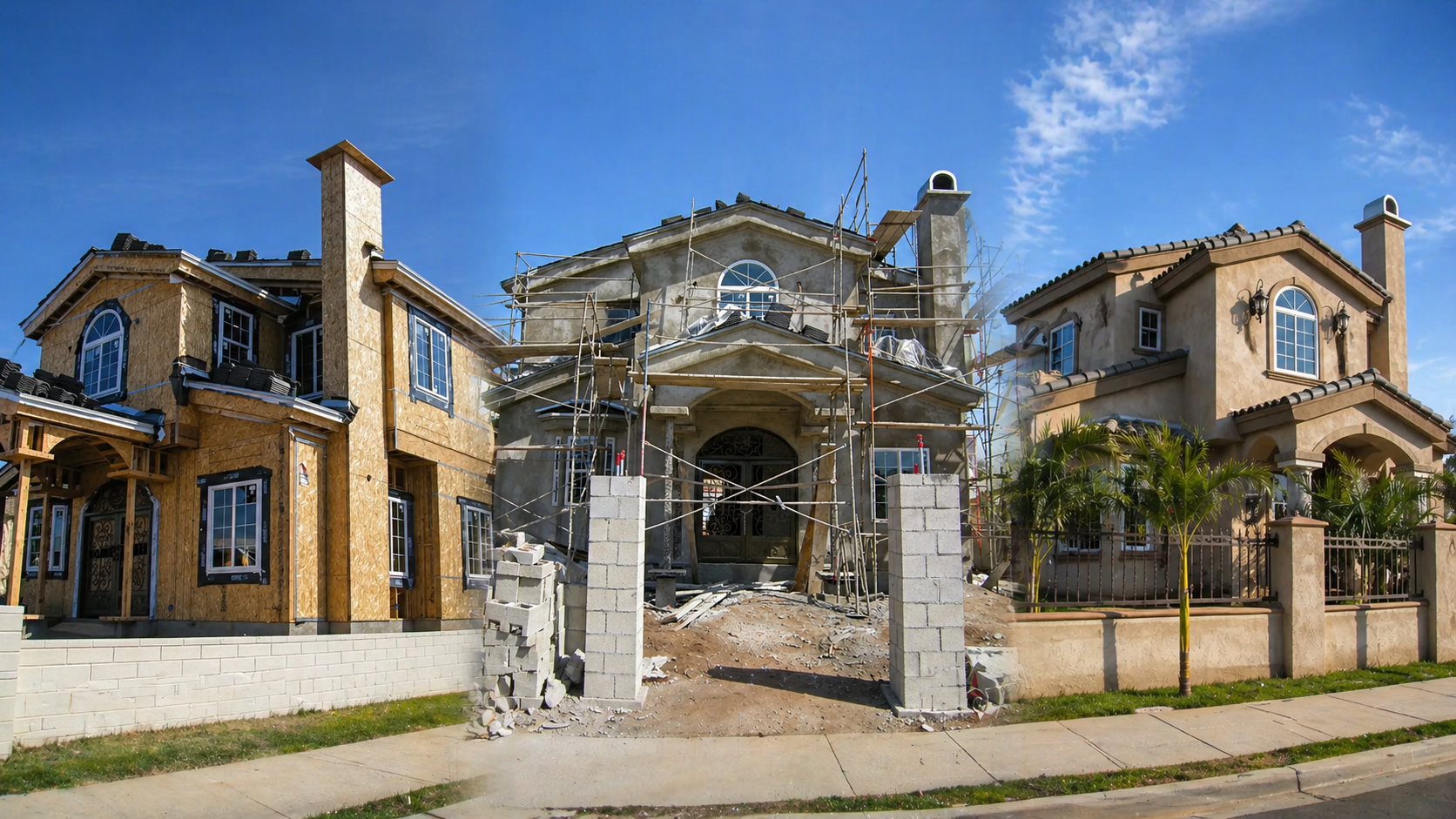
Accessory Dwelling Units, commonly known as ADUs, continue to be one of the most valuable residential construction opportunities for homeowners in San Diego. Whether the goal is to create a private space for family, generate rental income, increase property value, or add long-term flexibility to an existing home, an ADU can be a strategic investment when it is planned, permitted and built correctly.
In 2026, San Diego homeowners have more information, more design options and more permit pathways available than in previous years. However, ADU projects still require careful planning. The lot size, access, utilities, fire requirements, parking conditions, existing structures and jurisdiction all influence what can be built and how efficiently the project can move forward.
For homeowners considering ADU construction in San Diego, the most important step is not simply choosing a floor plan. The real priority is understanding whether the property can support the desired unit, what approvals are required, what the realistic cost range may be and which construction approach will create the best return on investment.
Why ADUs Are Still a Strong Opportunity in San Diego
San Diego continues to face high housing demand, limited available land and increasing interest in flexible living arrangements. This makes ADUs especially attractive for homeowners who already own property and want to maximize its use without purchasing additional real estate.
An ADU can serve several purposes. Some homeowners build one for aging parents or adult children. Others use it as a long-term rental, guest house, private office, studio or future downsizing option. In many cases, the ADU also improves the overall functionality and value of the property.
The City of San Diego recognizes ADUs and Junior ADUs through its Development Services framework, and official guidance confirms that ADUs are subject to applicable fees, school fees and development impact fee requirements depending on the project conditions. This means that while ADUs are encouraged, they are still regulated construction projects that must be handled professionally.
Best Areas in San Diego for ADU Projects in 2026
The best area for an ADU depends on the homeowner’s goal. A rental-focused ADU may perform better near employment centers, universities, hospitals, transit access or high-demand residential neighborhoods. A family-use ADU may be more focused on lot layout, privacy and accessibility.
North Park, South Park and Normal Heights
These communities are attractive for ADUs because they have strong rental demand, central access and many older residential properties with potential for detached or garage-conversion units. However, lots may be smaller, access may be tighter and older utilities may require upgrades.
Clairemont, Linda Vista and Bay Park
These areas often have strong ADU potential due to their central location, established neighborhoods and demand from renters who want access to beaches, universities, downtown and employment corridors. Homeowners in these areas should evaluate setbacks, slope conditions and utility access early.
La Mesa, Lemon Grove and El Cajon
For homeowners slightly outside the City of San Diego core, these areas may offer more lot flexibility depending on the specific property. They can be attractive for family-use ADUs or rental units where more space is available for separate entrances, parking and outdoor areas.
Chula Vista and South Bay Communities
South Bay communities continue to be important for ADU demand because of family-oriented neighborhoods, growing housing needs and proximity to major employment and border-region activity. Chula Vista also has relevance in the pre-approved plan conversation, because the City of San Diego accepts certain pre-approved plans from Chula Vista, County of San Diego and Encinitas programs.
Poway, Mira Mesa and Rancho Peñasquitos
These areas may be attractive for larger lots and family-oriented ADU planning. The key considerations are fire zone requirements, utility location, access, privacy and neighborhood-specific constraints.
Planning an ADU in San Diego
A successful ADU project starts with a property feasibility review. Before spending money on drawings, homeowners should understand what the lot can support and whether the desired ADU type is realistic.
The first planning questions should include:
- Can the property support a detached ADU, attached ADU, garage conversion or Junior ADU?
- Is there enough access for construction equipment?
- Will the project require utility upgrades?
- Are there slope, drainage or retaining wall concerns?
- Is the property in a high fire hazard area?
- Are there easements, setbacks or zoning limitations?
- Will the ADU be used for family, rental income or long-term property value?
These questions matter because the same 600-square-foot ADU can have very different costs and timelines depending on the site conditions. A flat lot with easy access and nearby utilities is very different from a hillside lot with limited access and major utility trenching.
Pre-Approved ADU Plans in San Diego
Pre-approved ADU plans can help homeowners move faster through the early design process, but they do not eliminate the need for project-specific review. The City of San Diego states that applicants may apply for permits using accepted pre-approved plans, including County of San Diego Standard ADU Plans, City of Chula Vista Standard ADU Plans and City of Encinitas Permit-Ready ADU Plans.
The County of San Diego also explains that its dwelling unit plans may be used as ADUs or single-family dwellings in unincorporated areas, but notes that the plans are approximately 85% complete and still require project-specific information.
This is important for homeowners to understand. “Pre-approved” does not mean “ready to build tomorrow.” Site plan, foundation conditions, utility connections, energy compliance, structural requirements, fire requirements and local jurisdiction review may still be required.
ADU Permit Process in San Diego
The permit process usually begins with feasibility, then design, then plan preparation, then submittal, review, corrections, approval and construction.
Step 1: Property Feasibility
The lot is reviewed for zoning, access, utilities, slope, setbacks and potential constraints. This step helps determine whether the ADU should be detached, attached, converted from an existing garage or designed as part of a larger residential improvement.
Step 2: Concept and Budget Planning
The homeowner chooses the approximate size, layout and use of the ADU. At this stage, the budget should include more than the structure. Sitework, utilities, permits, design, finishes, inspections, drainage and access improvements should be considered.
Step 3: Plans and Engineering
The design team prepares the drawings and required documents for submittal. Depending on the project, this may include architectural drawings, structural engineering, title 24 energy documentation, grading or civil review and utility planning.
Step 4: Permit Submittal and Review
The plans are submitted to the correct jurisdiction. The city or county may issue comments or corrections before approval. This is normal and should be expected in most construction projects.
Step 5: Construction and Inspections
Once permits are approved, construction begins. The project must pass required inspections at different stages, including foundation, framing, mechanical, electrical, plumbing, insulation, drywall and final inspection.
How Much Does an ADU Cost in San Diego in 2026?
ADU costs vary widely based on size, design, site conditions, finishes, utility work and permit requirements. A detached ADU generally costs more than a garage conversion because it requires more structure, foundation, utility routing and exterior work.
For 2026, one San Diego ADU cost guide estimates detached ADU construction at approximately $375 to $600+ per square foot for turnkey construction, with many homeowners investing roughly $300,000 to $450,000+ for a complete build including design, permits, sitework and utilities.
These numbers should be used as a planning range, not a guaranteed price. A small, simple ADU with efficient access may cost less than a larger custom unit with premium finishes, complex utility upgrades or difficult site conditions.
Main Factors That Affect ADU Cost
The biggest cost drivers usually include:
- Size and layout
- Detached vs. attached vs. garage conversion
- Foundation requirements
- Utility trenching and upgrades
- Electrical panel capacity
- Plumbing distance from existing connections
- Site access
- Fire zone requirements
- Finish level
- Permit and school fees
- Drainage or grading work
For homeowners, the best way to avoid budget surprises is to complete feasibility and scope planning before committing to a full design direction.
Common ADU Mistakes to Avoid
One of the most common mistakes is starting with a design before confirming what the property can actually support. Another mistake is comparing ADU prices only by square foot without considering utilities, sitework, permits and required upgrades.
Homeowners should also avoid assuming that every contractor includes the same scope. One estimate may include design coordination, permits, utility work and finish details, while another may only cover basic construction. This can create a misleading price comparison.
Another issue is underestimating timeline. Even with pre-approved plans, projects still require site-specific preparation, review and inspections.
Why Work With a Professional ADU Contractor
An ADU is a small home, but it is still a complete construction project. It may include foundation, framing, roofing, electrical, plumbing, HVAC, insulation, drywall, flooring, cabinetry, exterior finishes and final inspections.
Working with an experienced contractor helps homeowners manage the process from planning to completion. A professional team can identify site issues early, coordinate with design and permit professionals, manage construction sequencing and keep the project aligned with the homeowner’s goals.
For AH Construction, the focus is not only building the ADU, but helping homeowners make practical construction decisions that support budget, timeline, quality and long-term property value.
Is an ADU Right for Your San Diego Property?
An ADU may be a strong option if the property has usable space, reasonable access and a clear purpose for the new unit. The best candidates are homeowners who want to create functional living space, improve property flexibility or generate potential rental income.
Before moving forward, homeowners should review the property, define the use of the ADU and understand realistic cost expectations. A properly planned ADU can become one of the most valuable improvements a San Diego homeowner can make in 2026.
Start Your ADU Project With AH Construction
If you are considering an ADU in San Diego, AH Construction can help you evaluate your property, understand the construction requirements and plan a practical path forward. From early feasibility to construction execution, our team focuses on building functional, high-quality residential spaces that support your long-term goals.
Contact AH Construction to discuss your ADU project and request a professional construction consultation.