
Kitchen Remodeling for Aging in Place: Safe & Stylish Solutions
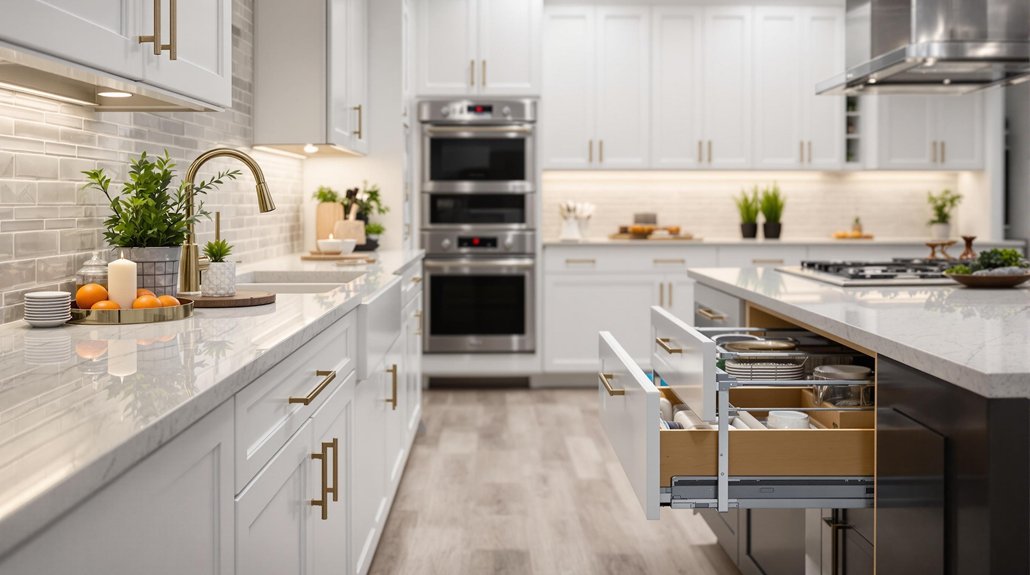
You can create a stunning kitchen that’s both safe and stylish by incorporating pull-out drawers, lever-style handles, and varied counter heights at 32, 36, and 42 inches. Add under-cabinet LED lighting and motion-sensor switches for improved visibility, and opt for non-slip flooring options, such as textured ceramic or luxury vinyl plank. Soft-close cabinet mechanisms reduce strain, and rounded counter edges prevent injuries. These thoughtful design choices promote independence without sacrificing elegance, and there’s much more to discover about transforming your space.
Key Takeaways
- Install pull-out drawers and lower wall cabinets to eliminate the need for reaching and bending while maintaining elegant design aesthetics.
- Choose varied counter heights (32″, 36″, 42″) with rounded edges and durable surfaces to accommodate different mobility needs.
- Add layered LED lighting, including under-cabinet strips and motion-sensor switches, to enhance visibility and prevent accidents.
- Choose non-slip flooring options, such as textured ceramic or luxury vinyl, that offer safety without compromising on style preferences.
- Incorporate lever-style handles and soft-close mechanisms to reduce hand strain while creating a sophisticated, accessible kitchen environment.
Essential Safety Features That Don't Compromise Style
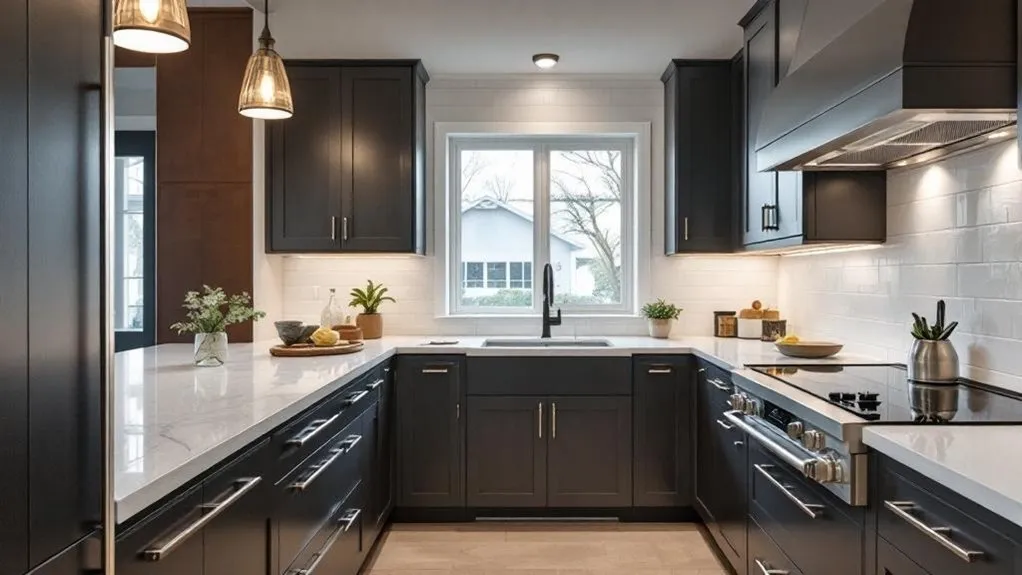
When planning a kitchen remodel for aging in place, you don’t have to sacrifice aesthetics for functionality. Modern safety features seamlessly blend with contemporary design.
Install pull-out drawers instead of deep cabinets to eliminate reaching and bending. Choose lever-style handles that accommodate arthritic hands while maintaining sleek lines.
Add under-cabinet LED lighting for task illumination without harsh overhead glare. Select non-slip flooring with subtle textures that complement your style.
Install soft-close cabinet doors to prevent slamming and finger injuries. Consider induction cooktops with automatic shut-off features disguised as premium appliances.
These upgrades enhance both safety and visual appeal effortlessly.
Cabinet and Storage Solutions for Easy Access
Smart cabinet configurations transform your kitchen into an accessible workspace that grows with your changing needs.
Strategic storage placement eliminates dangerous reaching and bending while maintaining your kitchen’s aesthetic appeal. You’ll discover that thoughtful cabinet design creates both independence and elegance in your daily routines.
- Pull-out drawers and shelves replace traditional cabinets, bringing items to you at waist height for effortless access
- Lazy Susans in corner cabinets maximize storage while eliminating awkward reaching into deep spaces
- Wall cabinets lowered to 15 inches above countertops keep essentials within comfortable reach
- Soft-close mechanisms prevent slamming and reduce hand strain
Counter Heights and Surfaces That Work for Everyone
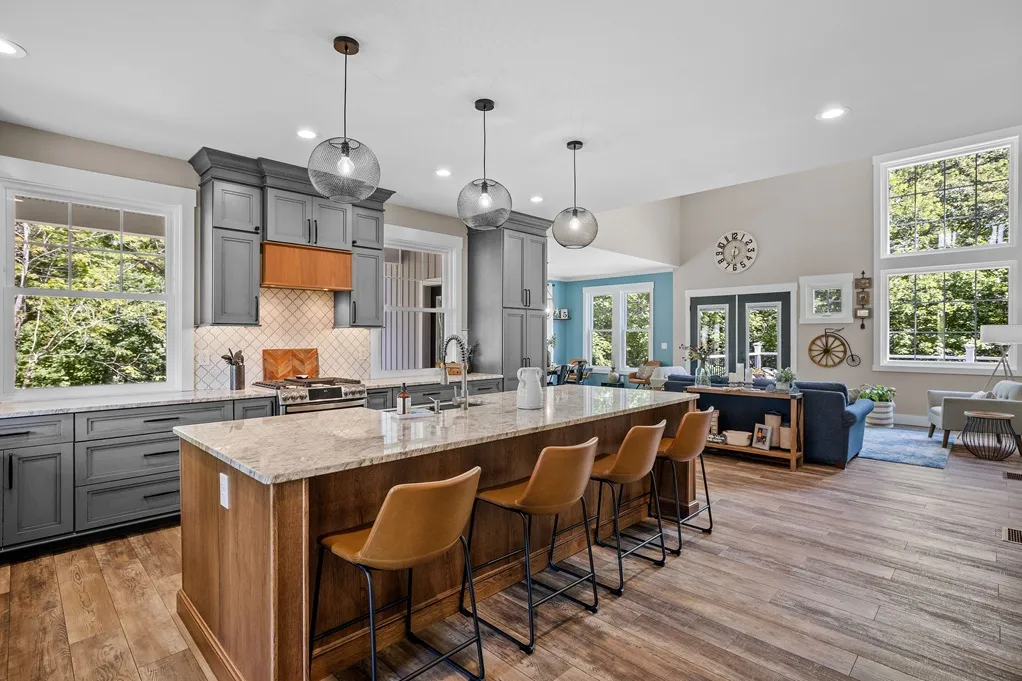
Since traditional counter heights don’t accommodate everyone’s needs, creating varied work surfaces guarantees your kitchen remains functional whether you’re standing, sitting, or using mobility aids.
Install counters at multiple heights: standard 36-inch sections for general prep, 32-inch areas for seated work, and 42-inch surfaces for standing tasks without bending.
Choose durable, low-maintenance materials like quartz or solid surface that resist stains and scratches while providing smooth, easy-to-clean surfaces.
Rounded counter edges prevent injuries from falls or bumps.
Consider pull-out work surfaces that extend from base cabinets, offering additional workspace at customizable heights when needed.
Lighting Design for Better Visibility and Ambiance
As vision naturally changes with age, proper lighting becomes essential for maintaining kitchen safety and functionality.
You’ll want to eliminate shadows and dark corners that can hide potential hazards or make food preparation difficult. Layer different types of lighting throughout your kitchen to create both practical illumination and pleasant ambiance.
- Under-cabinet LED strips illuminate countertops and eliminate shadows while chopping, reading recipes, or preparing meals safely.
- Pendant lights over islands provide focused task lighting for detailed work like measuring ingredients or decorating cakes.
- Recessed ceiling fixtures offer general ambient lighting that brightens the entire space evenly.
- Motion-sensor switches automatically activate lights when you enter, preventing fumbling in darkness.
Flooring Options That Prevent Slips and Falls
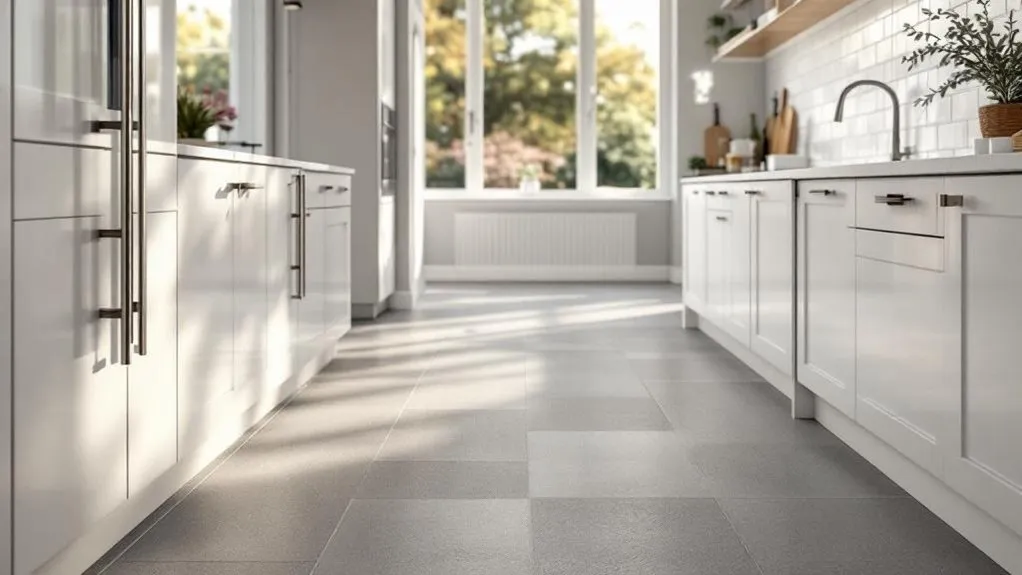
After ensuring your kitchen has proper lighting, you’ll need to focus on selecting flooring that keeps you steady on your feet.
Non-slip surface materials like textured vinyl, rubber, or specially treated ceramic tiles can dramatically reduce your risk of falling.
Look for flooring options that feature raised patterns, subtle grooves, or microscopic grip elements that provide traction even when wet.
Non-Slip Surface Materials
Falls in the kitchen pose one of the greatest safety risks for aging adults, making your choice of flooring material critical for maintaining independence at home.
Non-slip surface materials provide the traction you need while cooking and cleaning. Consider these excellent options:
- Textured ceramic tiles – Offer durability with slip-resistant glazes and raised patterns
- Natural cork flooring – Provides natural grip and cushioning for joints
- Luxury vinyl plank – Features textured surfaces that mimic wood without the slipperiness
- Rubber flooring – Delivers maximum traction and shock absorption for ultimate safety
These materials combine functionality with attractive aesthetics for your kitchen renovation.
Texture and Grip Features
Beyond selecting the right non-slip materials, you’ll want to examine the specific texture and grip features that make these flooring options truly effective at preventing accidents.
Look for surfaces with micro-textures that create friction without feeling rough underfoot. Raised patterns, embossed designs, and subtle ridges provide excellent traction while remaining comfortable for bare feet.
Avoid overly aggressive textures that can catch shoe soles or make cleaning difficult. The best grip features are barely noticeable visually but offer significant slip resistance.
Consider matte finishes over glossy ones, as they naturally provide better traction and hide water spots more effectively.
Appliance Selection for Comfort and Convenience
When you’re selecting appliances for your aging-in-place kitchen remodel, you’ll want to prioritize models that reduce physical strain and enhance daily functionality.
Choose appliances with accessible controls, manageable weights, and user-friendly features that’ll serve you well for years to come.
Key appliance features to evaluate:
- Side-by-side refrigerators with external water dispensers and easy-reach freezer compartments
- Wall ovens installed at comfortable heights to eliminate bending and heavy lifting
- Induction cooktops with automatic shut-off features and precise temperature control for safety
- Dishwashers with adjustable racks and front controls for effortless loading and operation
Smart technology integration can further enhance convenience and safety.
Frequently Asked Questions
What Is the Average Cost of an Aging-In-Place Kitchen Remodel?
You’ll typically spend between $15,000 to $50,000 on an aging-in-place kitchen remodel, depending on your home’s size and desired upgrades.
If you’re making basic safety modifications like adding grab bars and improving lighting, you’ll pay less.
However, if you’re installing accessible countertops, widening doorways, or upgrading appliances for easier use, you’ll invest more.
Your final cost depends on materials, labor, and how extensively you’re modifying the space.
How Long Does a Typical Aging-In-Place Kitchen Renovation Take to Complete?
You’ll typically need 6-12 weeks to complete your aging-in-place kitchen renovation, depending on the project’s scope.
Simple updates like installing grab bars and lever handles might take 2-4 weeks, while thorough remodels involving cabinet modifications, countertop changes, and appliance replacements require 8-12 weeks.
You’ll face potential delays from permit approvals, custom accessibility features, and material availability.
Planning ahead and working with experienced contractors who understand accessibility requirements will help you stay on schedule.
Do Aging-In-Place Kitchen Modifications Increase Home Resale Value?
Yes, you’ll typically see increased resale value from aging-in-place kitchen modifications.
You’re investing in features that appeal to a growing demographic of older buyers who want to stay in their homes longer.
Universal design elements like wider doorways, accessible storage, and non-slip flooring don’t just benefit seniors—they’re attractive to families with young children and people with mobility challenges too, broadening your potential buyer pool considerably.
Are There Tax Credits or Rebates Available for Accessibility Kitchen Upgrades?
You can find several tax benefits for accessibility kitchen upgrades.
The federal tax code offers credits for qualifying accessibility improvements, and many states provide additional rebates.
You’ll want to check with your local utility companies too—they often offer rebates for energy-efficient appliances installed during accessibility renovations.
Don’t forget to explore grants through aging and disability organizations.
Keep all receipts and consult a tax professional to maximize your savings opportunities.
Should I Hire a Certified Aging-In-Place Specialist for My Kitchen Remodel?
You should definitely consider hiring a certified aging-in-place specialist for your kitchen remodel.
They’ll bring specialized knowledge about accessibility requirements, safety features, and universal design principles that general contractors might miss.
These experts understand proper counter heights, cabinet accessibility, lighting needs, and flooring safety.
They’ll guarantee your kitchen meets current and future mobility needs while maintaining style.
The investment often pays off through better functionality, safety, and potentially higher resale value.